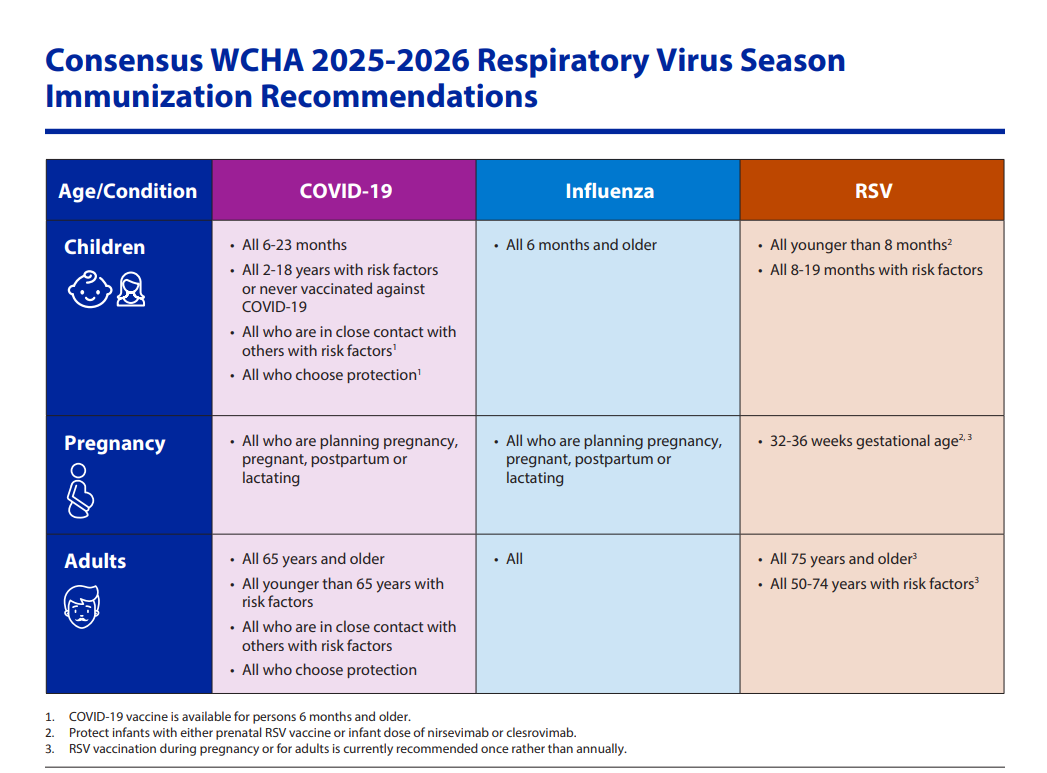
Public Health Supports the West Coast Health Alliance’s Evidence-Guided Vaccine Recommendations
Public Health Reaffirms: No Modifications to Immunization Schedules or Vaccine
Availability in Los Angeles County
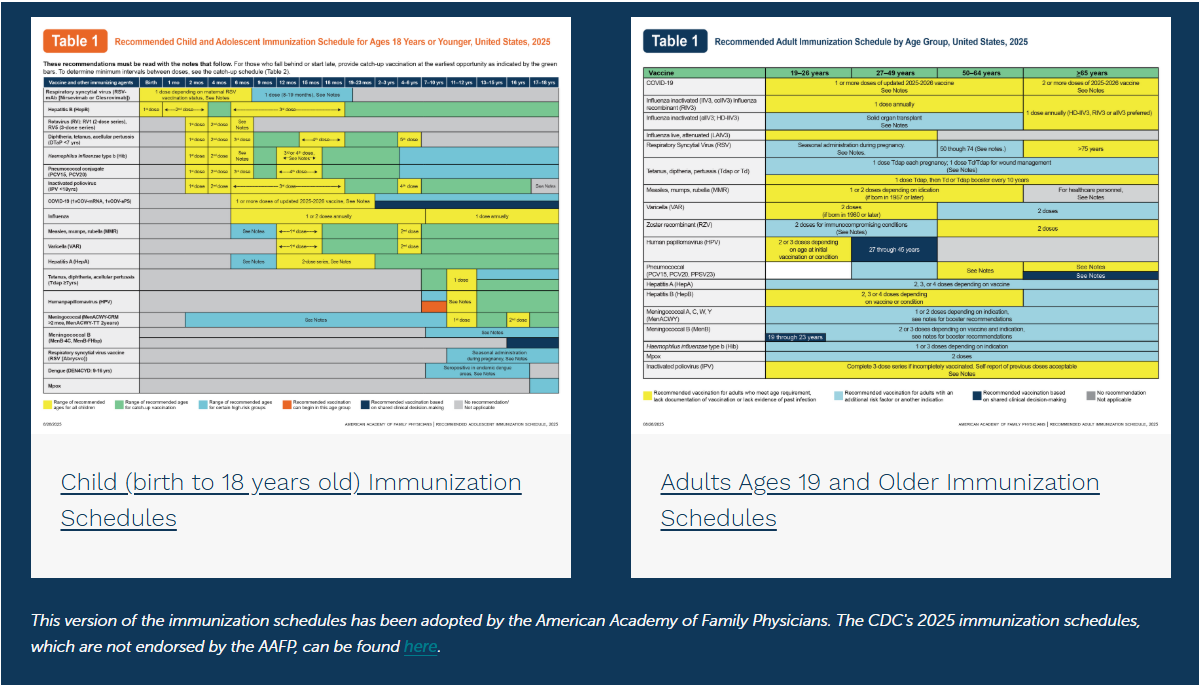
On January 5, 2026, U.S. Department of Health and Human
Services released a memo stating that the CDC's recommendations on childhood
vaccines will be updated to align more closely with those of other high-income
countries. The CDC will now routinely recommend vaccines for 11 diseases rather
than 17, and the remaining vaccines are now recommended under shared
clinical decision making. The Los Angeles County Department of
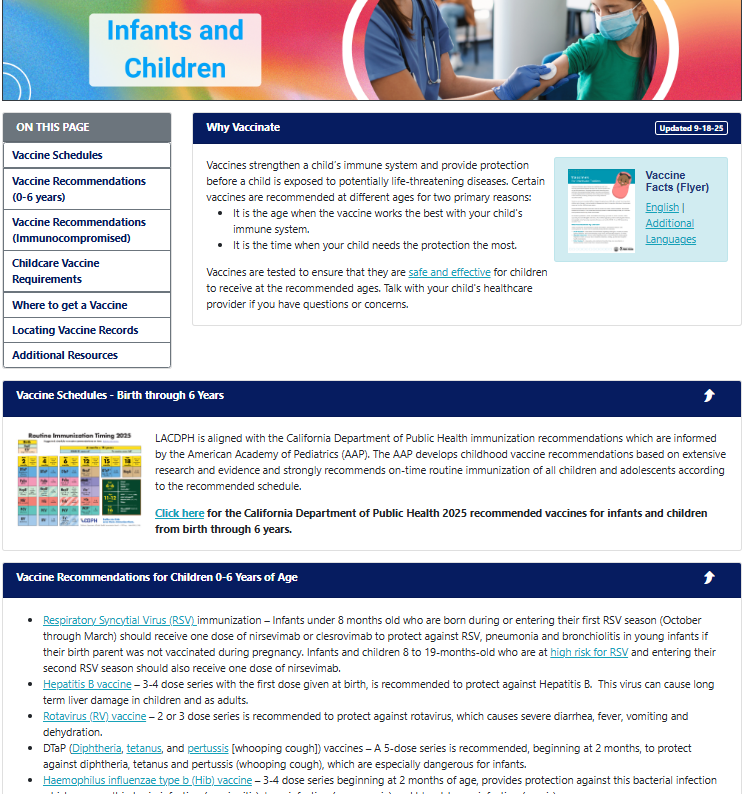
Public Health reaffirms that Los Angeles County is following existing California
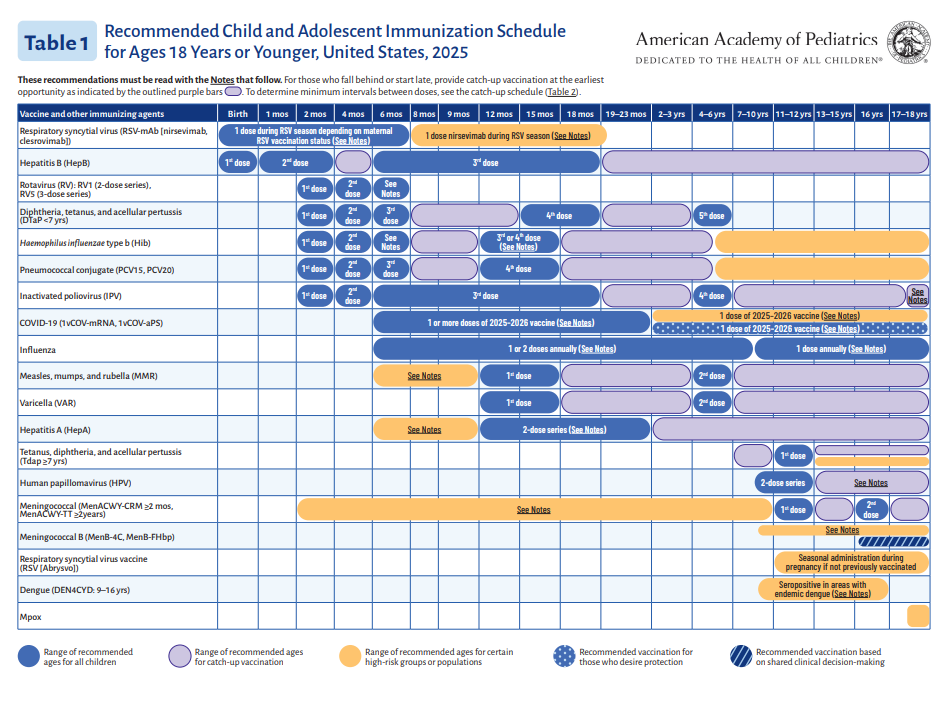
Department of Public Health (CDPH) vaccination guidelines for children that
align with recommendations from the American Academy of Pediatrics. There are no
modifications to immunization schedules or vaccine availability for people
living in Los Angeles County at this time. There is no change in vaccine
financing or availability through the Vaccine for Children's Program.
The Los Angeles County Department of Public Health reaffirms that there
are no changes to childhood immunization schedules or vaccine availability
in Los Angeles County. The County continues to follow the
California Department of Public Health (CDPH) recommendations
,
which align with guidance from the American Academy of Pediatrics.
Statement from the Los Angeles County Department of Public Health
November 21, 2025
The Los Angeles County Department of Public Health is aware of recent changes to the
CDC's
"Autism and Vaccines" webpage. The updated statement,
"Scientific studies have not ruled out the possibility that infant vaccines
contribute to the development of autism,"
may give people the impression that there is meaningful scientific uncertainty on
this topic.
There is no new evidence supporting those claims, and the statement
does not reflect the current scientific consensus.
More than 25 years of research involving over 5.6 million children has found
no link between routine childhood vaccines and autism.
This conclusion is supported by the American Academy of Pediatrics, the California
Department of Public Health, the World Health Organization, and numerous leading
research institutions.
The increase in autism diagnoses reflects improved screening, broader diagnostic
criteria, and greater awareness-not a link to vaccines. The continued spread of this
myth can stigmatize members of the autism community and their families. For more
information, visit the American
Academy of Pediatrics.
Guidance for Parents and Families
We understand how confusing misleading statements can be, especially for parents
making decisions about their children's health. Families are encouraged to speak
with their child's healthcare provider and rely on trusted, evidence-based
information from organizations such as the American Academy of Pediatrics and the
California Department of Public Health.
Vaccines remain safe, effective, and a vital tool for protecting children's
health. Parents should continue following the recommended childhood
immunization schedule and consult their child's healthcare provider with any
questions.
Public Health remains committed to providing clear, transparent, science-based
guidance and ensuring continued access to vaccines that protect families, strengthen
communities, and save lives.